France: 10 Hidden Gems You Need to Discover
Beyond the Eiffel Tower, discover ten lesser-known treasures: the Camargue, Strasbourg Cathedral, Honfleur, Père Lachaise, Vence's Matisse chapel, Albi's red city, Les Baux-de-Provence, the Palace of Fontainebleau, the Catacombs of Paris, and Roussillon, the "Colorado of Provence," a hill village in the Luberon built on ochre and glowing in terracotta and red. From the Rhône delta to the Île-de-France and the ochre cliffs of the Vaucluse, these hidden gems reveal a France that rewards the curious traveler.

When travelers imagine France, the Eiffel Tower, Provence's lavender fields, or the French Riviera often come to mind. But ten lesser-known treasures deserve a place on your itinerary: the Camargue, a wild wetland south of Arles; Strasbourg Cathedral, the world's oldest Gothic cathedral in Alsace; Honfleur, the Normandy harbour that inspired the Impressionists; Père Lachaise in Paris, the world's most visited cemetery; Vence, a Provençal hill town where Matisse designed the Chapelle du Rosaire; Albi, the "red city" on the Tarn with the world's largest brick cathedral and the Toulouse-Lautrec museum; Les Baux-de-Provence, a fortified village in the Alpilles with the Carrières de Lumières; the Palace of Fontainebleau, 55 km southeast of Paris, Napoleon's favourite residence and where he abdicated in 1814; the Catacombs of Paris, an ossuary beneath Montparnasse holding the remains of over six million people; and Roussillon, the "Colorado of Provence," a hill village in the Luberon built on ochre and glowing in terracotta and red. From pink flamingos and white horses to a 142-metre spire, slate-fronted quays, famous graves, a Matisse chapel, Southern Gothic brick, immersive quarry projections, eight centuries of royal decor, the empire of the dead under the streets, and ochre cliffs in the Vaucluse, these hidden gems offer a sense of discovery that feels a world away from the usual tourist trail.
Camargue
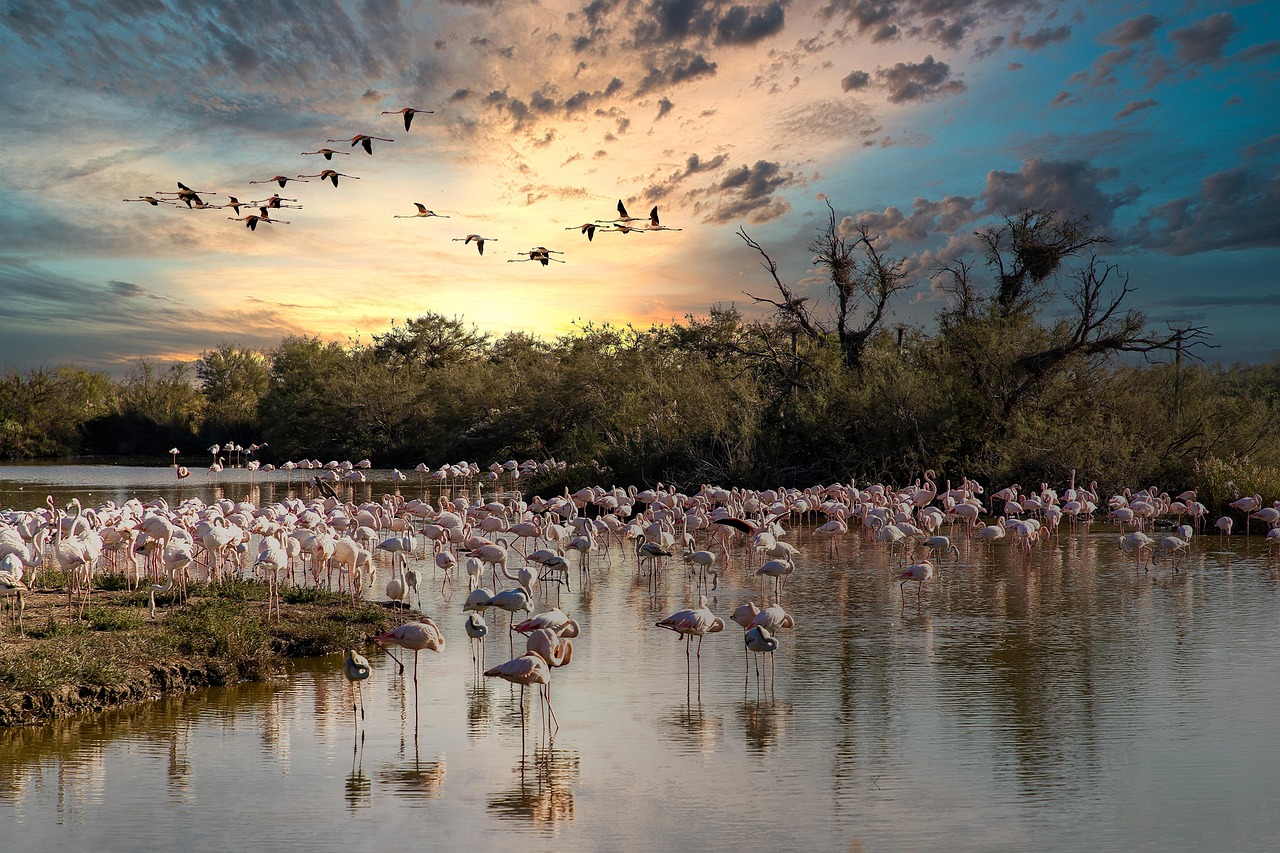
The Camargue is the Rhône delta in southern France—930 km² between the Grand Rhône, the Petit Rhône, and the Mediterranean. It is often called the "île de la Camargue" (island of the Camargue) because it is enclosed by the river’s two branches and the sea: it is not an offshore island but the delta itself, with the coast forming its southern edge. About one third is lakes and marsh; the rest is cultivated or part of the Parc naturel régional de Camargue (Ramsar since 1986). Semi-feral white horses and black cattle, tended by gardians (Camarguais cowboys), roam the marshes. For raw nature and a living cattle culture, the Camargue is a hidden gem.
Arles, where the Rhône splits, is the main gateway; the D570 runs south. Saintes-Maries-de-la-Mer (about 45 km southwest) is the "capital": climb Notre-Dame-de-la-Mer for views; the May Romani pilgrimage honours Saint Sarah; morning market Monday and Friday. Aigues-Mortes (west) has a medieval walled town and Salin d'Aigues-Mortes with pink lakes. Salin-de-Giraud is the start for the free belvédère and cycling to Plage de Piémanson. A car is best; in summer bring mosquito repellent.
Over 400 bird species—flamingos, pelicans, egrets, herons—draw visitors; autumn and spring see the largest migrations. The Parc Ornithologique du Pont de Gau has walkways and hides (1–2 h, wheelchair-accessible; bring repellent). Try horseback rides across the marshes or to the beach; cycle from Salin-de-Giraud along the Route de la Mer to the pink salt lakes and Plage de Piémanson. Domaine de Méjanes stages the course camarguaise (raseteurs and rosettes; bulls are not killed). Taste red Camargue rice, gardiane de taureau, and tellines. Spring and autumn are best; the belvédère at Salin-de-Giraud is free.
Strasbourg Cathedral
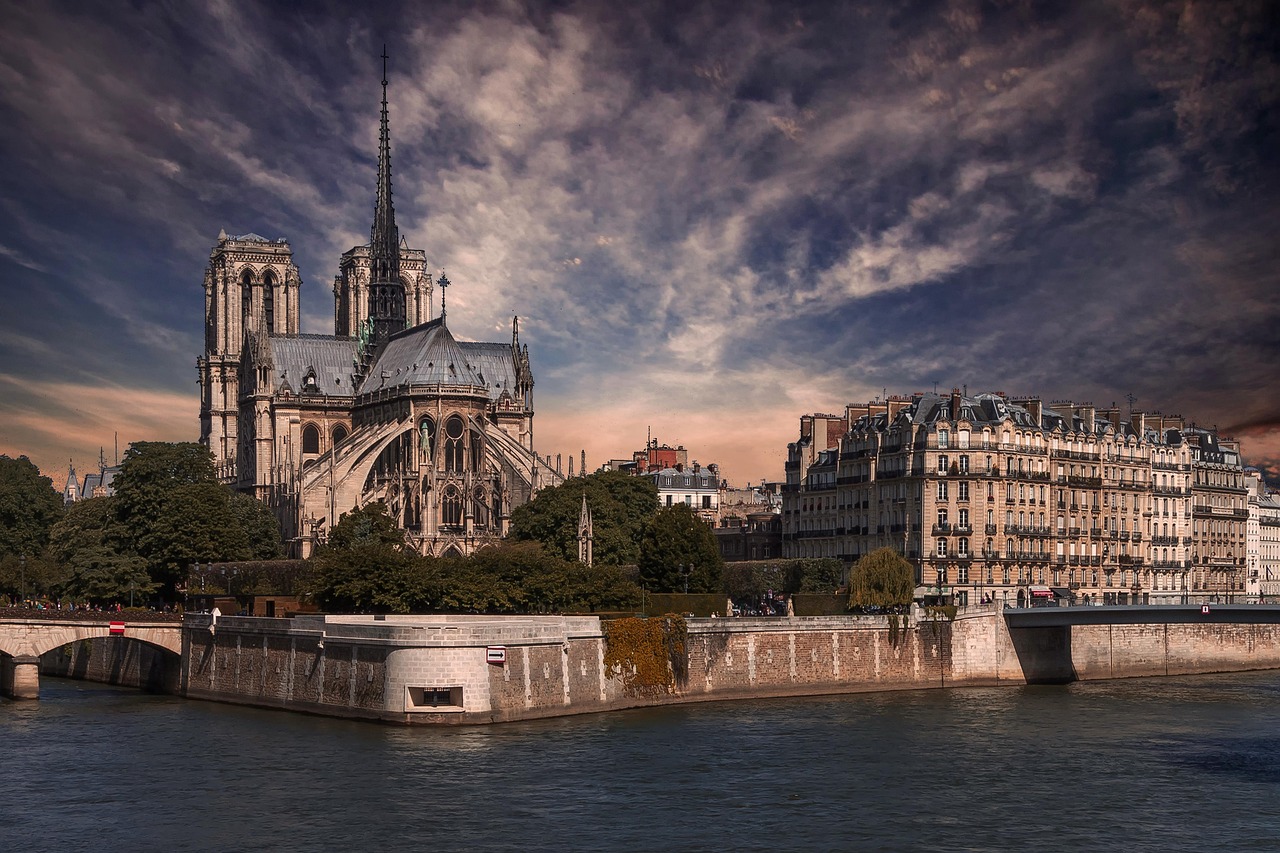
Strasbourg Cathedral (Cathédrale Notre-Dame de Strasbourg) rises 142 metres above Place de la Cathédrale in the heart of Alsace. Often called the world's oldest Gothic cathedral and the second-most visited in France, it was the world's tallest building from 1647 to 1874. Built between 1015 and 1439, it mixes Romanesque and Rayonnant Gothic. Victor Hugo described it as a "gigantic and delicate marvel." Its reddish Vosges sandstone gives it a distinctive colour. Inscribed with the Grande Île on the UNESCO World Heritage List in 1988, it has been cared for by the Fondation de l'Œuvre Notre-Dame since at least 1224.
Entry is free (no reservation); there is a wheelchair ramp. Opening hours: Monday–Saturday 8:30–11:15 and 12:45–17:45; Sunday and holidays 14:00–17:15. Reach it by tram (Homme de Fer, Langstross, or Broglie), on foot from the station, or by car, park at a relais and take the tram. Go in the morning to avoid long queues.
Outside, admire the west front, the 13.6 m rose window, and the single octagonal spire. Inside, don't miss the 32 m nave, 12th–15th century stained glass, the grand organ, and the crypt. The famous astronomical clock in the south transept is 18 m high; at 12:30 the automata run daily except Sundays. The viewing platform at 66 m (332 steps from the guardians' lodge, Place du Château) offers 360° views over Strasbourg, the Petite France, and the Vosges. The Musée de l'Œuvre Notre-Dame, next door, displays original sculptures and stained glass. In July–August, a son et lumière runs on the façade each evening.
Honfleur
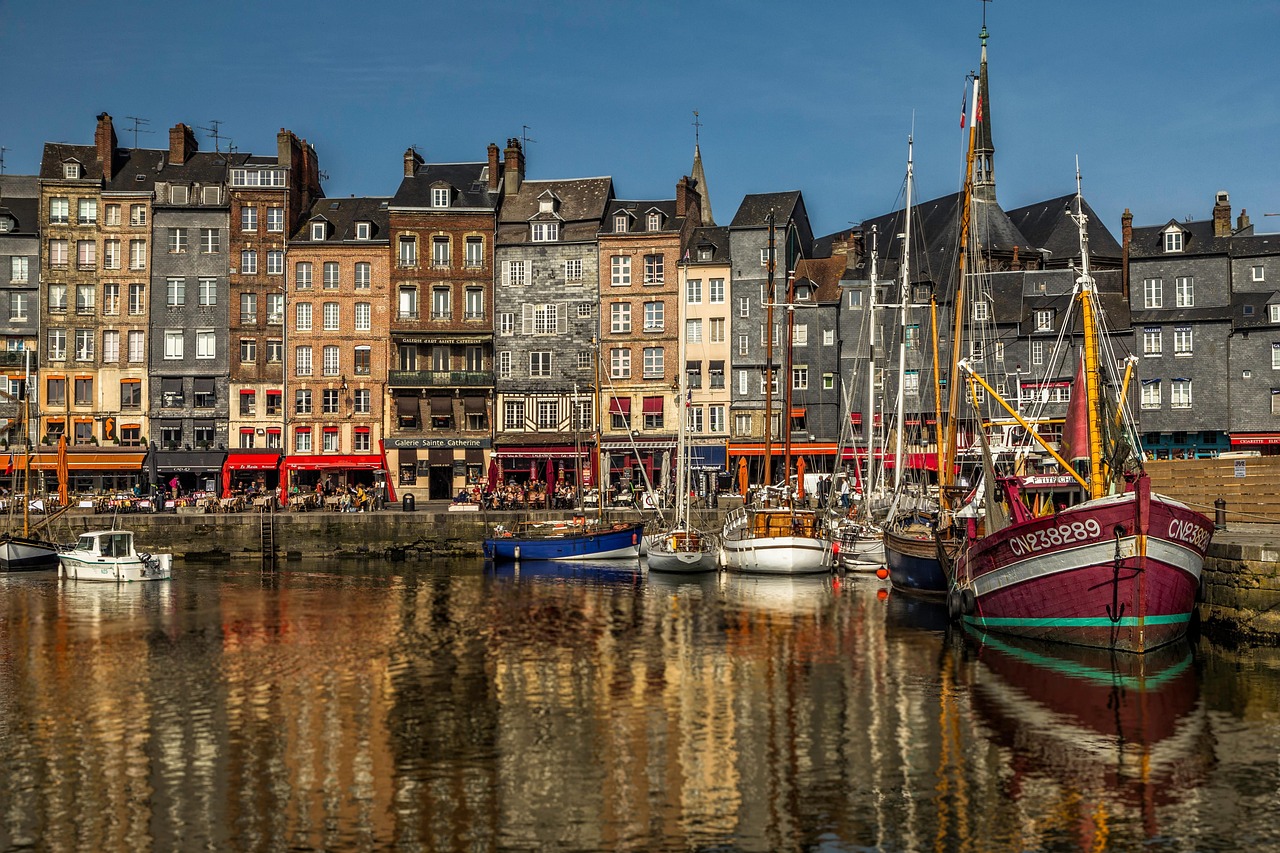
Honfleur is a harbour town in Calvados, Normandy, on the southern bank of the Seine estuary, across from Le Havre and near the Pont de Normandie. It stands at the eastern end of the Côte Fleurie and, with about 6,600 inhabitants, is one of France's most visited ports. The old port, the Vieux Bassin, is lined with tall, slate-fronted houses painted by Courbet, Boudin, Monet, and Jongkind, the "Saint Siméon gathering" that helped shape Impressionism. The church of Sainte-Catherine, built by shipwrights in the 15th century, is the largest wooden church in France and has a separate bell tower; entry is free. For a harbour full of art and maritime history, Honfleur is a hidden gem of Normandy.
Honfleur is a 2.5–3 hour drive from Paris. The Pont de Normandie links it to Le Havre. Parking: the free Parking du Naturospace fills quickly; central Parking Bassin du Centre costs around €7 for two hours. Arrive early, crowds build from around 11am. The town is small; the Vieux Bassin, Sainte-Catherine, and main streets are within 10–15 minutes on foot. Deauville and Trouville are about 25 minutes away.
Spend time around the Vieux Bassin at different times of day for changing light. Visit Sainte-Catherine and its bell-tower museum, and Saint-Léonard with its lavoir and 1760 belfry. Wander the cobbled streets, galleries, and boutiques; try cider and crêpes or mussels in cider and galettes. The Eugène Boudin Museum holds around 200 works by Boudin and other Impressionists (closed Tuesday; €10). The Maisons Satie celebrates Erik Satie, born in Honfleur in 1866. The Chapel of Notre-Dame de Grâce, about a mile east, has fine views over the Seine and Pont de Normandie. You can see the best of Honfleur in half a day, or stay overnight to enjoy the harbour at dusk.
Père Lachaise Cemetery
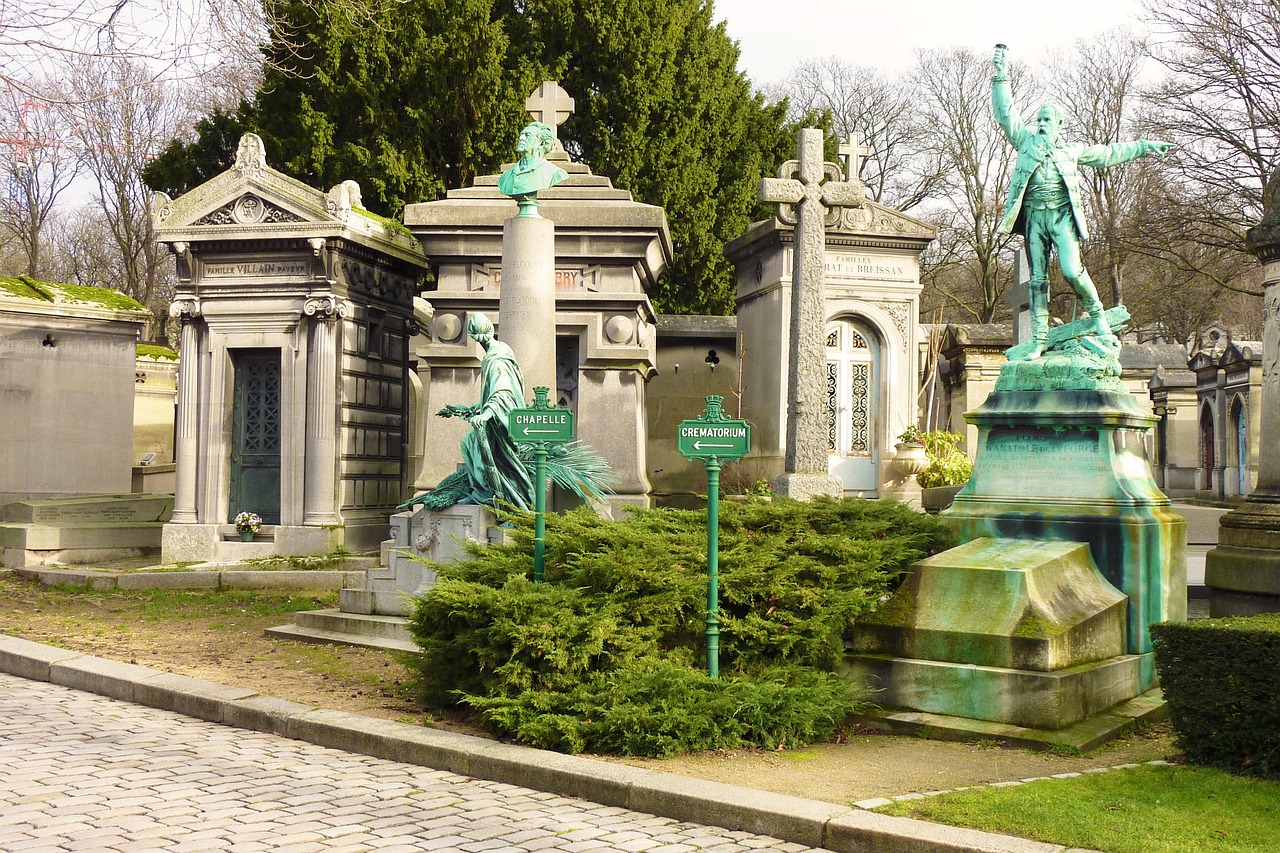
Père Lachaise (Cimetière du Père-Lachaise) in the 20th arrondissement is the largest cemetery in Paris—44 hectares—and the most visited necropolis in the world, with over 3.5 million visitors a year. It opened in 1804 as the first garden cemetery in Paris; it is named after Père François de la Chaise, Louis XIV's confessor. Designed by Brongniart in an English-style landscape, it grew in fame after the 1817 transfer of Molière, La Fontaine, and Abélard and Héloïse. More than 1 million people are buried here; the Communards' Wall marks where 147 were shot in 1871. For an open-air museum of funerary art and quiet lanes, Père Lachaise is a hidden gem.
Entry is free. Métro Philippe Auguste (Line 2) is next to the main entrance; Père Lachaise (Lines 2 and 3) and Gambetta (Line 3) serve other gates. Arrive early or in late afternoon. Allow 2–3 hours. Wear comfortable shoes, paths are winding and cobblestoned. Stay on the paths and do not step on or touch graves.
Famous graves include Oscar Wilde, Jim Morrison, Chopin, Piaf, Balzac, Stein, Colette, Bernhardt, Proust, and Delacroix. Héloïse and Abélard share a monument; the columbarium holds Maria Callas's cenotaph. Pick up the official map at the entrance or follow a suggested loop with two or three anchor graves, then wander. The Mur des Fédérés and the crematorium are worth a detour.
Vence
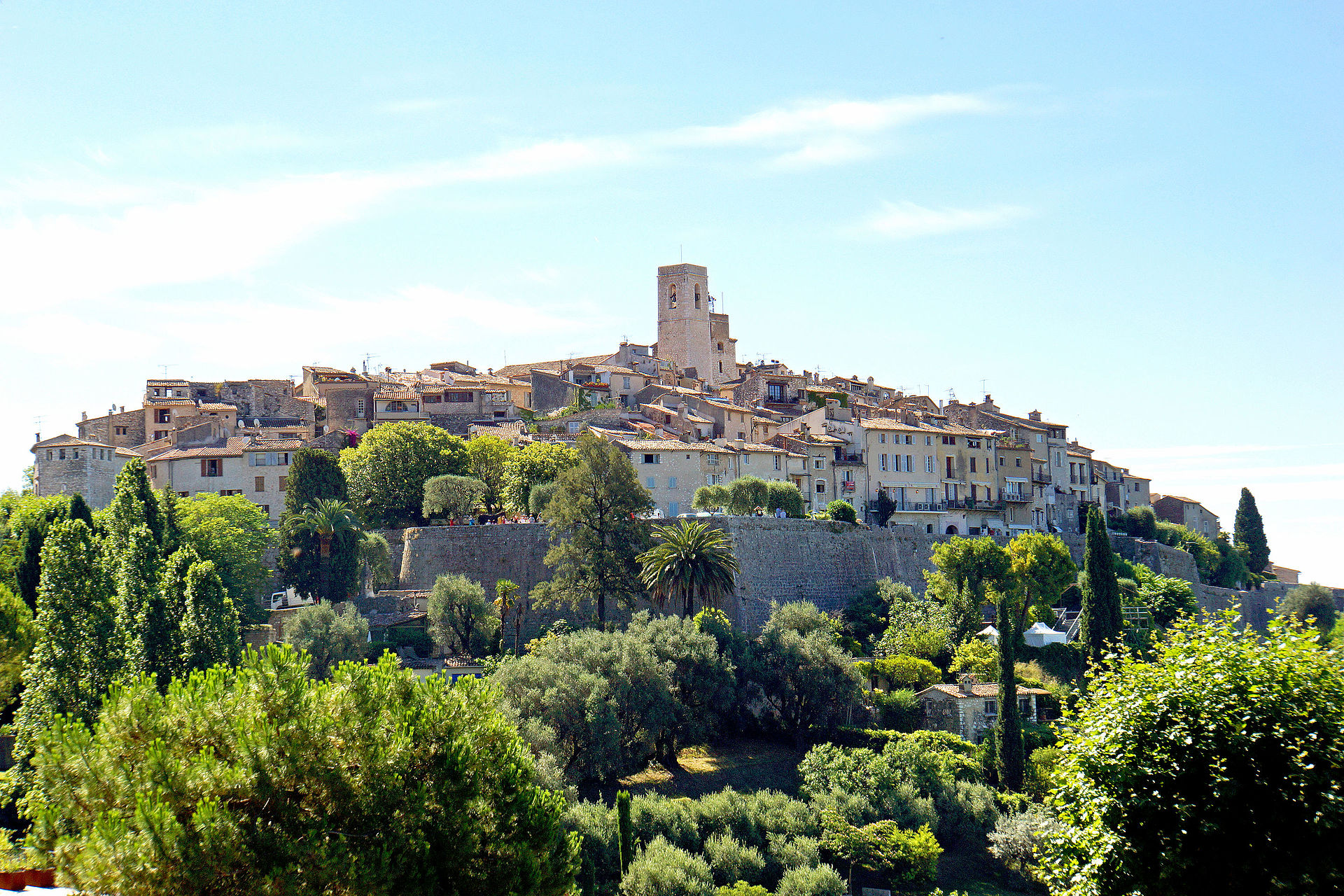
Vence is a medieval walled town in the Alpes-Maritimes, north of Nice and Antibes, with views over the Mediterranean and the Baous. With about 20,000 inhabitants, it offers the charm of a Provençal village, halfway between the sea and the hinterland on the road to Grasse. The cathedral, built in the 4th century on a Roman temple, is one of the smallest in France and holds a mosaic by Chagall (1979). Above the old town, the Chapelle du Rosaire (1948–1951) was designed entirely by Matisse, stained glass, fittings, and all, after he moved to Vence in 1943. The castle houses the Fondation Émile Hugues (modern art). For art, history, and hill-village atmosphere, Vence is a hidden gem of the French Riviera.
Vence is about 20–25 minutes by car from Nice; it sits near Saint-Paul-de-Vence (about 3 km), Tourrettes-sur-Loup, and Grasse. The Place du Peyra and Place du Grand Jardin are good starting points. In late June, Festi'Vence extends the Fête de la Musique to three days with free outdoor concerts.
Visit the Chapelle du Rosaire (check opening times and entry fee), the cathedral and its Chagall mosaic, and the Fondation Émile Hugues. Stroll the cobbled lanes and shaded squares; have coffee on the Place du Peyra or Grand Jardin. Combine with Saint-Paul-de-Vence and the Fondation Maeght, or with Tourrettes-sur-Loup and Gourdon. Vence works well as a half-day from Nice or as a base for the hill villages of the Côte d'Azur.
Albi
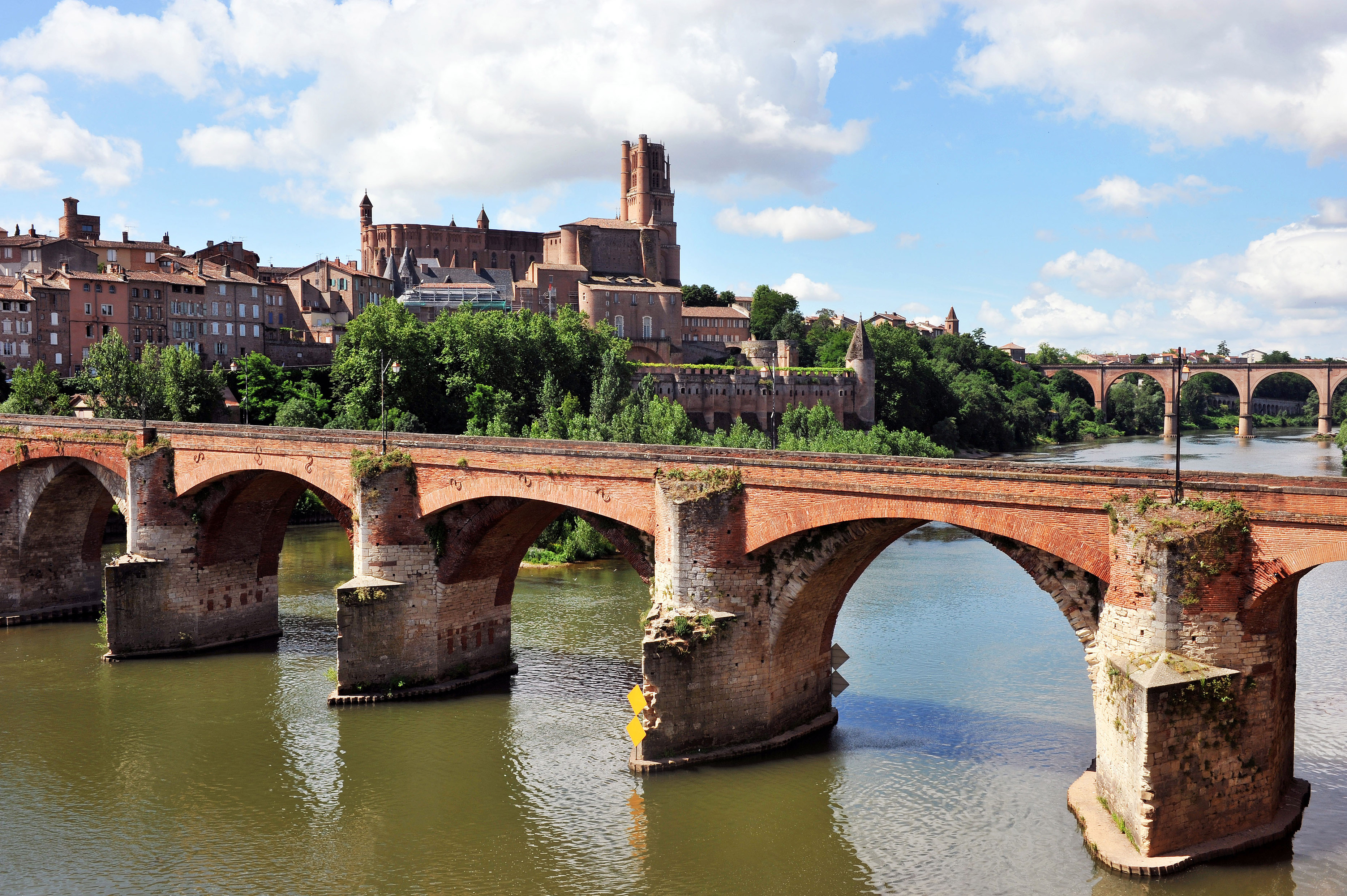
Albi is the prefecture of the Tarn in Occitania, on the river Tarn about 85 km northeast of Toulouse. The "red city" is built in Languedoc-style red brick. In 2010 the Episcopal City of Albi was inscribed on the UNESCO World Heritage List. At its heart stands the cathedral of Sainte-Cécile, a masterpiece of Southern French Gothic and the largest brick-built cathedral in the world. Its austere exterior contrasts with a sumptuous interior: Italian frescoes, a Flamboyant rood screen, over 200 polychrome statues, and an 18th-century organ. The Palais de la Berbie houses the Musée Toulouse-Lautrec, Toulouse-Lautrec was born in Albi in 1864, with more than 1,000 works, including the Moulin Rouge posters. The Pont Vieux (1040) is one of the oldest bridges in France still in use. For history, art, and striking brick architecture, Albi is a hidden gem of the Southwest.
Albi is about one hour from Toulouse by train (Albi-Ville) or by car on the A68. The Albi City Pass (€15) covers the Toulouse-Lautrec museum and the cathedral's Grand Choir. The cathedral charges around €6; add about €5 for the Grand Choir. The Jardin de la Berbie offers a belvedere over the Tarn and Pont Vieux. Don't miss Saint-Salvi and its cloisters (free), the oldest church in Albi.
Combine the Toulouse-Lautrec museum and the cathedral for a memorable half-day. Stroll the Jardin de la Berbie, cross the Pont Vieux, and explore Saint-Salvi and the medieval streets. Local specialities include cassoulet, duck confit, and foie gras; Gaillac wines are widely available. Albi works perfectly as a day trip from Toulouse or as a base for the Tarn and Occitania.
Les Baux-de-Provence
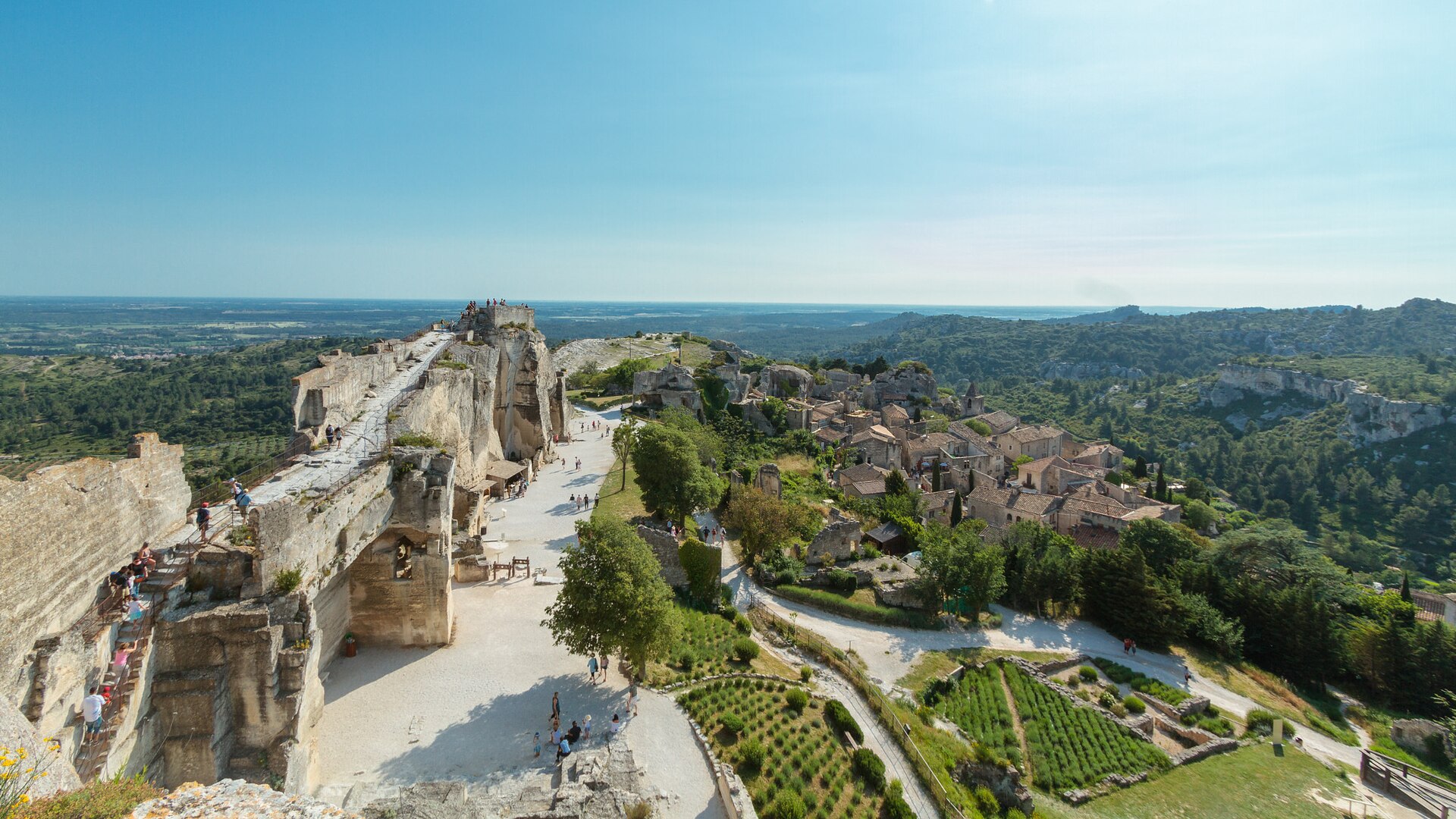
Les Baux-de-Provence (often simply Les Baux) is a village in the Alpilles, in Bouches-du-Rhône, northeast of Arles. It crowns a rocky spur with a ruined castle, the same site where bauxite was discovered in 1821, giving the aluminium ore its name. With only about 260 inhabitants but over 1.5 million visitors a year, it is one of Les Plus Beaux Villages de France. The Château des Baux (11th–13th century) stretches over seven hectares: donjon, troglodyte houses, Saracen tower, and windmill. The 12th-century church of Saint-Vincent is partly troglodyte and has modern stained glass by Max Ingrand; the Chapelle des Pénitents Blancs holds Yves Brayer's frescoes. For a fortress village, sweeping views, and layers of history, Les Baux is a hidden gem of Provence.
Les Baux is about 22 km south of Avignon and 15 km northeast of Arles; the D27 runs through the village. Arrive early, it gets very busy. In the Val d'Enfer, the Carrières de Lumières (Culturespaces) is a must: former limestone quarries where giant images are projected onto walls up to 14 m high, with music, an immersive, ever-changing show. Coteaux-des-Baux-de-Provence AOC and AOC olive oil from the Vallée des Baux are worth tasting. Saint-Rémy-de-Provence and Glanum are nearby.
Visit the Château des Baux for the ruins and panoramic views over the Alpilles. Stroll the cobbled lanes and look for the "Post Tenebras Lux" window. See Saint-Vincent and the Chapelle des Pénitents Blancs. Do not miss the Carrières de Lumières. Combine with Saint-Rémy or Arles. During the Journées Européennes du Patrimoine (September), the château is often free to enter.
Palace of Fontainebleau
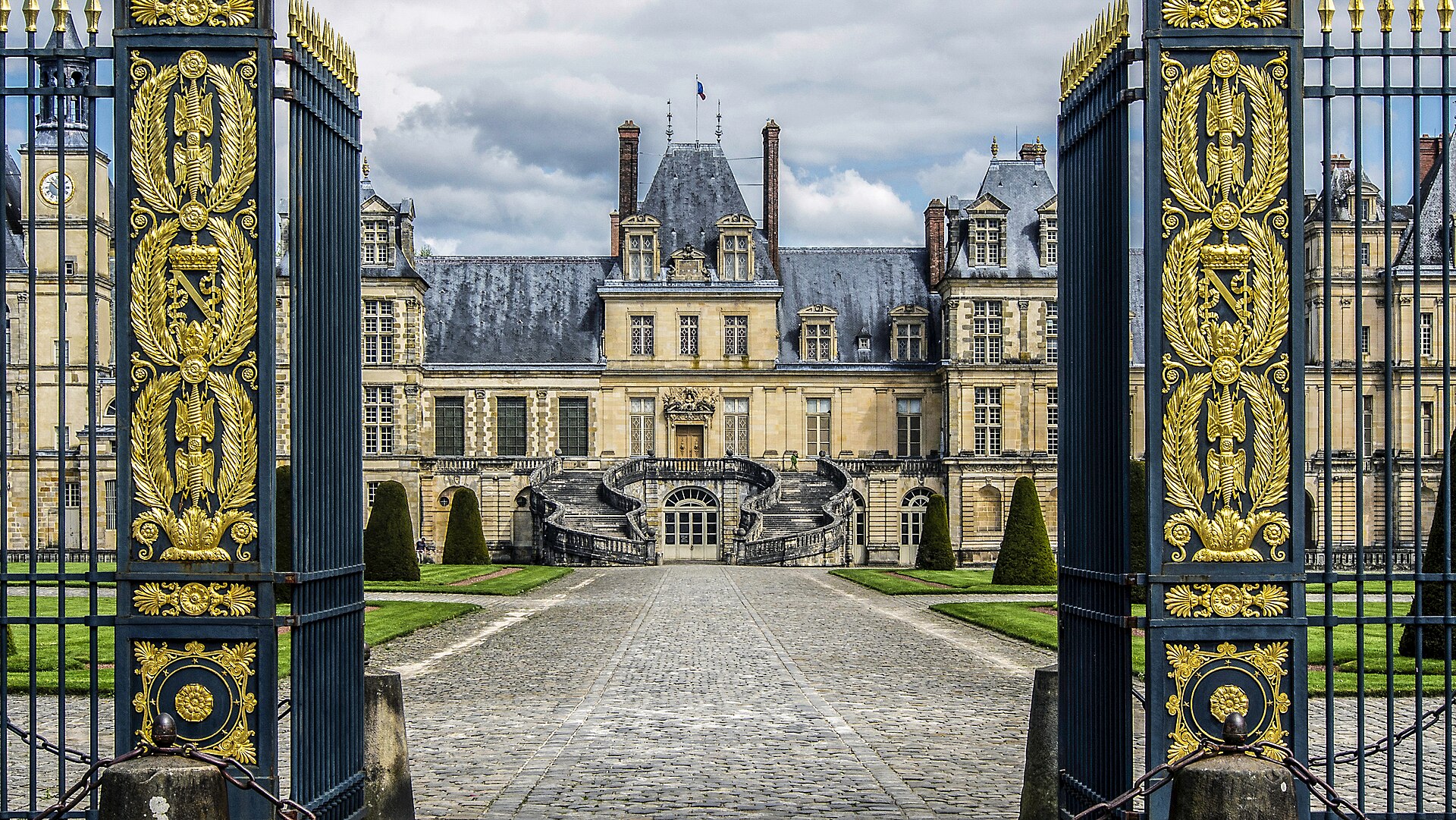
The Palace of Fontainebleau (Château de Fontainebleau) is one of the largest French royal châteaux, 55 km southeast of Paris. It was a hunting lodge and autumn residence for French monarchs from Louis VII to Napoleon III, the only royal and imperial château continuously inhabited for eight centuries. Napoleon called it "the true residence of kings"; he abdicated here on 4 April 1814 and bade farewell to his Old Guard in the Cour d'Honneur on 20 April. UNESCO listed the palace and park in 1981. Francis I created the Galerie François I, decorated by Rosso Fiorentino and Primaticcio, the first School of Fontainebleau. Henry II added the horseshoe staircase (symbol of the château) and the ballroom; Henry IV the Gallery of Diana, the Trinity chapel, and a 1,200 m Grand Canal. For layered royal and imperial history and 130 hectares of gardens, Fontainebleau is a hidden gem of the Île-de-France.
By train from Paris: R line (Transilien) from Gare de Lyon to Fontainebleau–Avon (about 40 minutes), then bus 1 to the château. By car, about 55 minutes. The château is open every day except Tuesday: 9:30–17:00 (18:00 April–September). Admission around €12 (free for under-18s, students; free for all first Sunday of the month except June–September). The park and gardens are free. Allow at least two hours for the palace.
Start in the Cour d'Honneur at the horseshoe staircase. Visit the Grands Appartements (Francis I's gallery, throne room, Marie Antoinette's boudoir), the Napoléon I Museum (the desk where he signed his abdication), the Trinity chapel, and the Gallery of Diana. Stroll the Grand Canal and the gardens. The forest of Fontainebleau nearby offers walking and climbing. Fontainebleau is an easy day trip from Paris and less crowded than Versailles.
Catacombes de Paris
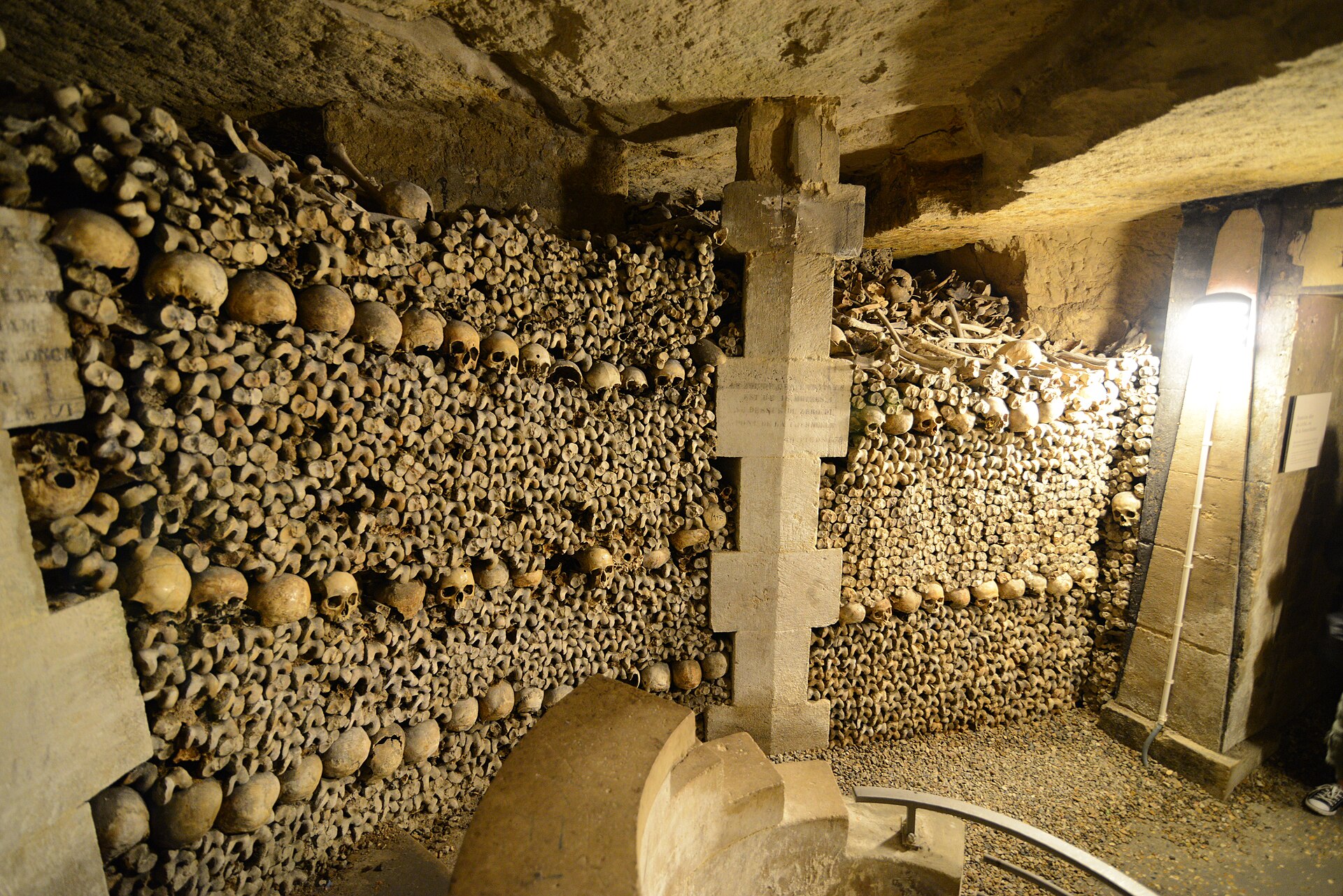
The Catacombs of Paris (Catacombes de Paris) are underground ossuaries in the 14th arrondissement holding the remains of more than six million people. They occupy former Lutetian limestone quarries extending south from the old Barrière d'Enfer near Place Denfert-Rochereau. In the late 18th century, overflowing cemeteries posed such a health risk that Paris moved its dead into the abandoned quarries. From 1786, bones were transferred from most of the city's cemeteries into the tunnels. Héricart de Thury turned the caverns into a visitable mausoleum: skulls and bones arranged in the patterns seen today, with tablets such as "Arrête! C'est ici l'empire de la Mort" ("Stop! The empire of Death lies here"). The ossuary opened to the public from 1874. Victor Hugo wrote that "Paris has another Paris under herself." For a sobering journey under the streets, the Catacombs are a hidden gem.
The entrance is at 1 avenue du Colonel Henri Rol-Tanguy (Place Denfert-Rochereau). Métro and RER: Denfert-Rochereau (lines 4, 6, RER B). Booking online is strongly recommended, advance tickets (around €14) include timed entry. Only 200 visitors are allowed underground at a time. The route is about 1.5 km, 20 metres below ground: 131 steps down, 112 steps up. Allow 45–90 minutes. The site is cool (around 14°C), dimly lit, and narrow; wear comfortable shoes. Do not touch the bones; flash photography is prohibited.
Pass under the "Arrête! C'est ici l'empire de la Mort" portal and follow the galleries. Look for the Crypt of the Sepulchral Lamp and the plaques that identify the cemeteries of origin. The French Resistance used these tunnels; Colonel Rol-Tanguy led the insurrection for the liberation of Paris from here in 1944. The visitable ossuary is only a small part of the 300-plus km of quarries under Paris. Combine with a walk in Montparnasse or a visit to Père Lachaise.
Roussillon
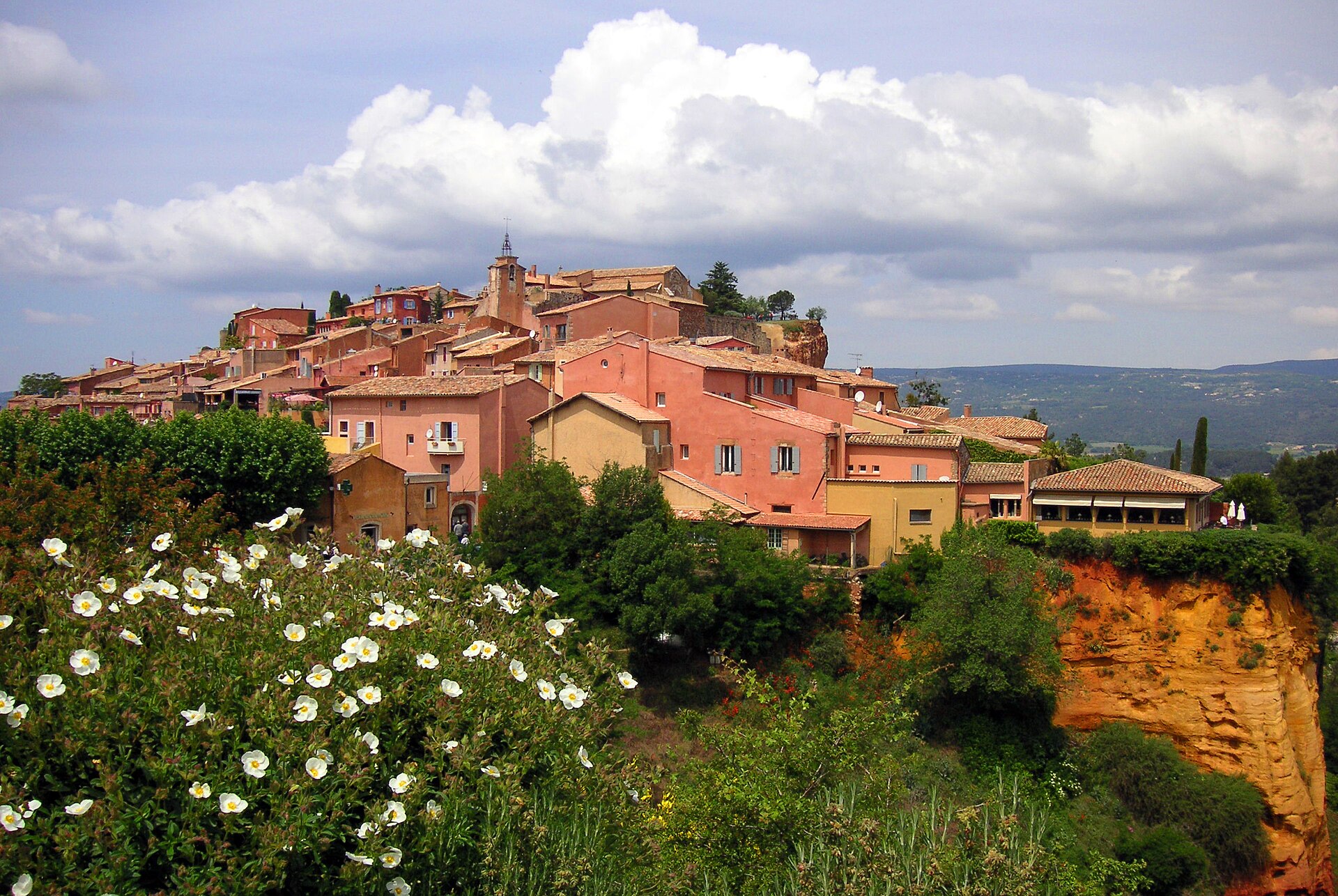
Roussillon is a commune in the Vaucluse, in the Parc naturel régional du Luberon, and a member of Les Plus Beaux Villages de France. The village is famous for its ochre deposits, natural pigments from yellow and orange to red. Ochre was mined from the end of the 18th century until 1930; today the buildings are built with ochre-infused materials, so the village glows in terracotta, lemon, and blood red, the "Colorado of Provence." Samuel Beckett hid from the Nazis in Roussillon (1942–1945) and wrote much of Watt there. The Usine Mathieu is now the Conservatoire des Ocres et de la Couleur, a workshop and museum. For a hill village that is both a natural wonder and a work of human craft, Roussillon is a hidden gem of the Luberon.
Roussillon has no train station; the nearest is Cavaillon (bus 15.3) and the nearest TGV is Avignon. By car: about 50 minutes from Avignon via the D900; about 1.5 hours from Marseille. The Sentier des Ocres (Ochre Path) is the must-do: a walk through the old ochre workings, short loop (about 35 minutes) or long (about 55 minutes). Entry around €3.50. Wear comfortable shoes; do not wear white, ochre stains are permanent. Visit early or late to avoid heat and crowds. Spring and autumn are ideal.
Walk the Sentier des Ocres, then wander the streets, cafés, and galleries. Visit the Conservatoire des Ocres for the history of ochre mining. See the church of Saint-Michel and the viewpoint over the rooftops and the Luberon. Combine with Gordes, Lacoste, Ménerbes, or Apt. Roussillon works perfectly as the final stop on a Luberon village loop, and as the last of these ten hidden gems, it leaves you with the glow of ochre and the essence of Provence.
Conclusion
The Camargue, Strasbourg Cathedral, Honfleur, Père Lachaise, Vence, Albi, Les Baux-de-Provence, the Palace of Fontainebleau, the Catacombs of Paris, and Roussillon show how much France has to offer beyond the usual highlights. Whether you're watching flamingos over the Rhône delta, gazing from a 66-metre platform at the oldest Gothic cathedral, wandering Honfleur's slate-fronted quays, following the cobbled lanes of the world's most visited cemetery, discovering Matisse's chapel in a Provençal hill town, standing beneath the world's largest brick cathedral in Albi, walking the ruins of Les Baux with the Alpilles at your feet, crossing the Cour d'Honneur where Napoleon said farewell to his Guard, descending into the empire of the dead beneath Montparnasse, or walking the Sentier des Ocres in Roussillon as the terracotta village glows above you, these ten hidden gems reward curiosity and a willingness to explore. Add them to your list and discover sides of France that many travelers never see.
Spirit of Traveling Team
Passionate traveler and content creator sharing authentic travel experiences and practical tips for independent explorers.